eu

Checkout using your account
This form is protected by reCAPTCHA - the Google Privacy Policy and Terms of Service apply.
Checkout as a new customer
Creating an account has many benefits:
- See order and shipping status
- Track order history
- Check out faster
Sep 14, 2026
∙
Ciat Magazine
Interior lighting: how to create a layered lighting scheme
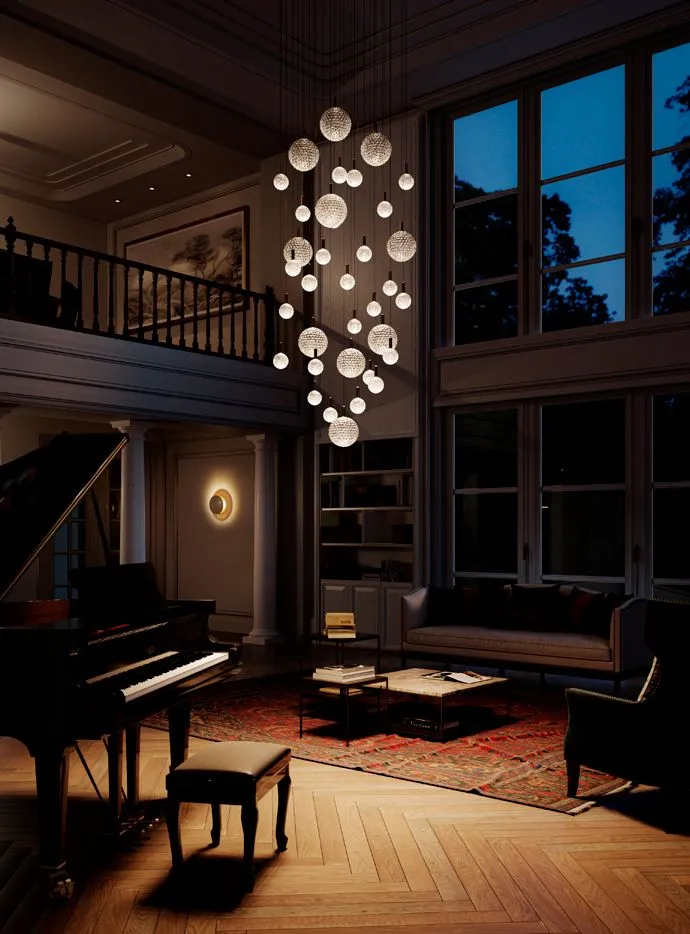
Lighting should not be treated as a final detail to add once furniture and finishes have already been chosen. Light changes the way we perceive a space, highlights materials and volumes, supports everyday activities and can make the same room feel more intimate, dynamic or welcoming.
For this reason, designing interior lighting well means moving beyond the idea of a single source that simply illuminates the entire room. Contemporary interiors work best when light is built in layers, combining ambient, task and accent lighting.
The result does not depend on how many lamps are present, but on how the different sources interact. A pendant light, wall lamp, floor lamp or table lamp can each serve a different purpose and, together, create a lighting scheme that feels consistent with both the space and the way it is used.
Why a single light source is often not enough
A room lit by one central fixture may be technically bright, but that does not necessarily mean it is well lit. Light tends to spread evenly, leaving little room for depth, hierarchy or variation.
In a living room, for example, needs change throughout the day: reading, talking, watching a film, entertaining guests or simply relaxing all require different lighting conditions. A single fixture is rarely able to respond effectively to all of them.
This is where layered lighting becomes important. Combining different levels of light makes it possible to illuminate what is needed, when it is needed, while also shaping the atmosphere of the room.
Designing lighting in layers does not mean adding as many light sources as possible. It means giving each one a clear role.
Lighting design starts with natural light
Before choosing lamps and fixtures, it is important to understand how natural light enters the room.
Window orientation, the size of openings, curtains, room depth and surface colours all influence the amount and quality of daylight available throughout the day.
A space that is very bright during daylight hours may only need additional artificial lighting in the evening, while an area further away from windows may require a dedicated light source even during the day.
Artificial lighting works best when it complements natural light rather than trying to replace it evenly. The goal is to support the room as conditions change from morning to evening.

The first layer: ambient lighting
Ambient lighting forms the base of a room's lighting scheme. Its purpose is to provide comfortable overall illumination and make it easy to move through the space.
It can be created with pendant lights, ceiling fixtures, track systems, spotlights or indirect lighting, depending on the architecture and style of the interior.
Good ambient lighting does not have to feel flat. Light reflected from walls and ceilings, for example, can create a softer effect than a very intense and concentrated source.
The key is to treat ambient lighting as a foundation rather than the only solution.
The second layer: task lighting
Task lighting is designed for activities that require greater visual precision.
A desk lamp, lighting over a kitchen worktop or a reading lamp beside an armchair all respond to specific, localised needs.
This type of lighting should be planned in relation to people and furniture, avoiding glare, distracting shadows or fixtures positioned where they do not effectively support the activity.
Task lighting is therefore closely connected to the real use of the room. It should not be planned from the floor plan alone, but by considering where and how different activities will actually take place.
Light intensity should also match the task. Reading, cooking, working at a computer or carrying out detailed manual work all require different lighting conditions. A well-positioned source can improve visibility without forcing the entire room to be illuminated at the same intensity.
When integrated correctly with ambient lighting, task lighting also improves visual comfort by reducing eye strain and excessive contrast, making the space more practical without compromising its overall atmosphere.


The third layer: accent lighting
Accent lighting introduces hierarchy and depth.
<
It can be used to highlight a work of art, a bookcase, a textured wall, a niche or an architectural detail. In other cases, it can simply create a more intimate area within a larger room.
br>This is the layer that prevents every part of the room from being perceived in the same way. Some surfaces can remain softer, while others gain greater visual importance.
Used carefully, accent lighting can also help create a focal point without the need to add more decorative elements.
Decorative lighting: when the fixture becomes part of the interior
There is also a level at which a lamp does more than provide light and becomes an important visual element even when switched off.
A sculptural pendant above a dining table, a floor lamp beside a sofa or a distinctive table lamp can become a design element in its own right and contribute to the overall composition of the room.
The risk is to confuse the visual impact of the fixture with the quality of the lighting itself. A highly expressive lamp can become a focal feature, but it should still fit into a broader lighting scheme.
The most successful lighting schemes bring form and function together: the fixture enhances the room while also delivering the right type of light for its purpose.
Designing light at different heights
Layered lighting also means placing light sources at different heights.
If every fixture comes from the ceiling, the room may feel visually uniform and the lower part of the space can lack definition. Wall lights, floor lamps and table lamps introduce a sequence of different levels.
Light closer to eye level often creates a more intimate atmosphere; lighting directed toward a wall can visually expand a surface; a lower source can highlight a piece of furniture or help define a route through the room.
By varying height, direction and intensity, lighting becomes a true composition rather than a simple distribution of fixtures.
Colour temperature and colour rendering
Where a light source is positioned matters, but so does the type of light it produces.
Colour temperature influences how a room feels. Warmer tones tend to create a more welcoming atmosphere and are particularly suitable for relaxation and social areas, while a more neutral light may work better in spaces where greater attention and precision are required.
It is also important for materials, fabrics and colours to be reproduced naturally. Good colour rendering helps surfaces and finishes appear more accurate and supports the overall quality of the interior design.
Within the same room, it is generally best to avoid random contrasts between sources with very different colour temperatures unless this is part of a deliberate design decision.
Dimmers and lighting scenes: one room, different atmospheres
One of the main advantages of layered lighting is the ability to change the atmosphere without changing the furniture layout.
Dimmers and separate controls allow the same room to feel brighter during everyday activities and softer in the evening.
In a living room, for example, ambient lighting can be reduced while a floor lamp and a few accent lights remain on. In a dining area, the pendant above the table may become the main light source during dinner.
Planning these scenes from the beginning helps avoid a system in which every fixture switches on at the same time and at the same intensity.
How layered lighting changes from room to room
The principle remains the same, but the balance between the different layers changes depending on the space.
In the living room, it is useful to combine ambient lighting with floor or table lamps near seating areas and accent lighting for walls, artwork, bookcases or architectural features.
In the dining area, the light above the table often becomes the main focus, supported by softer lighting throughout the rest of the room.
In the kitchen, task lighting is essential: worktops need effective, well-directed illumination, while the dining or social area can use warmer and more decorative sources.
In the bedroom, strong general lighting may be less important than bedside lamps, wall lights and indirect lighting, which help create a more relaxing atmosphere.
There is therefore no single formula that works for every room. The layers remain the same, but their importance changes according to how the space is used.
Common mistakes in interior lighting design
One of the most common mistakes is trying to illuminate everything in the same way. A uniformly bright room may seem practical, but it often lacks depth and character.
Another problem occurs when fixtures are chosen purely for their design without considering beam direction, intensity or their actual position in the room.
Too many light sources can also become counterproductive. If every lamp tries to attract attention, the space loses hierarchy and the overall scheme feels fragmented.
It is also easy to underestimate the importance of control. Without separate circuits or dimmers, even a well-designed combination of fixtures can feel inflexible at different times of day.
How to create a balanced lighting scheme
A good lighting design starts with the way a space is used and with its architecture, not with a catalogue of lamps.
First, identify the areas that need ambient lighting, those that require greater visual precision and the elements that deserve to be highlighted. Only then should the most suitable fixtures be selected and positioned at the right height.
The goal is not to eliminate shadows completely. On the contrary, controlled contrast between brighter and softer areas gives the room depth and makes it more visually interesting.
When the different layers are balanced, lighting stops feeling like a separate element and becomes part of the interior composition itself.
At CIAT Design, you can find pendant, wall, floor and table lamps from leading contemporary design brands, with solutions that help combine functionality, atmosphere and visual identity.

Frequently asked questions about interior lighting
What are the main layers of interior lighting?
A layered lighting scheme generally combines ambient lighting, task lighting and accent lighting. Ambient light provides the overall base, task lighting supports specific activities, while accent lighting creates visual hierarchy and highlights selected features. Decorative fixtures can also play an important role as design elements within the room.
How do you choose the right colour temperature for interior lighting?
The right colour temperature depends on the function of the room and the atmosphere you want to create. Warmer tones are often suitable for living rooms, conversation areas and bedrooms, while more neutral light can work well in task-oriented spaces. It is also important to maintain consistency between the different light sources used within the same room.
How many light sources does a room need?
There is no fixed number of light sources that works for every room. The right amount depends on the size of the space, the available natural light, the furniture layout and the activities carried out there. In most cases, combining different types of lighting is more effective than simply increasing the number of fixtures.
How can you create layered lighting in a living room?
A living room can combine ambient lighting with floor or table lamps near seating areas and accent lighting for walls, artwork, bookcases or architectural details. Separate controls and dimmers make it easier to adjust the atmosphere throughout the day and create different lighting scenes for different activities.
Are dimmable lights useful in interior design?
Yes, especially in multifunctional spaces. Dimmable lighting makes it possible to adapt the same light source to different activities and times of day, moving from brighter functional lighting to a softer and more relaxed atmosphere. This makes the room more flexible and comfortable to use.
Frequently asked questions about interior lighting
What are the main layers of interior lighting?
A layered lighting scheme generally combines ambient lighting, task lighting and accent lighting. Ambient light provides the overall base, task lighting supports specific activities, while accent lighting creates visual hierarchy and highlights selected features. Decorative fixtures can also play an important role as design elements within the room.
How do you choose the right colour temperature for interior lighting?
The right colour temperature depends on the function of the room and the atmosphere you want to create. Warmer tones are often suitable for living rooms, conversation areas and bedrooms, while more neutral light can work well in task-oriented spaces. It is also important to maintain consistency between the different light sources used within the same room.
How many light sources does a room need?
There is no fixed number of light sources that works for every room. The right amount depends on the size of the space, the available natural light, the furniture layout and the activities carried out there. In most cases, combining different types of lighting is more effective than simply increasing the number of fixtures.
How can you create layered lighting in a living room?
A living room can combine ambient lighting with floor or table lamps near seating areas and accent lighting for walls, artwork, bookcases or architectural details. Separate controls and dimmers make it easier to adjust the atmosphere throughout the day and create different lighting scenes for different activities.
Are dimmable lights useful in interior design?
Yes, especially in multifunctional spaces. Dimmable lighting makes it possible to adapt the same light source to different activities and times of day, moving from brighter functional lighting to a softer and more relaxed atmosphere. This makes the room more flexible and comfortable to use.
Select country